Category: Uncategorized

  • Bionova® PCD98: A Standardized Process Challenge Device for VH₂O₂ Sterilization Monitoring

    Bionova® PCD98: A Standardized Process Challenge Device for VH₂O₂ Sterilization Monitoring

    Effective VH₂O₂ Sterilization Monitoring Starts with a Standardized Challenge

    Effective sterilization monitoring is a critical component of infection prevention programs in healthcare facilities. In vaporized hydrogen peroxide (VH₂O₂) sterilization processes, biological indicators (BIs) play an essential role in demonstrating process efficacy. However, routine monitoring practices in many Sterile Processing Departments (SPDs) continue to rely on standalone biological indicators placed inside sterilization pouches, an approach that introduces variability and provides a lower level of process challenge than current best practice recommendations.

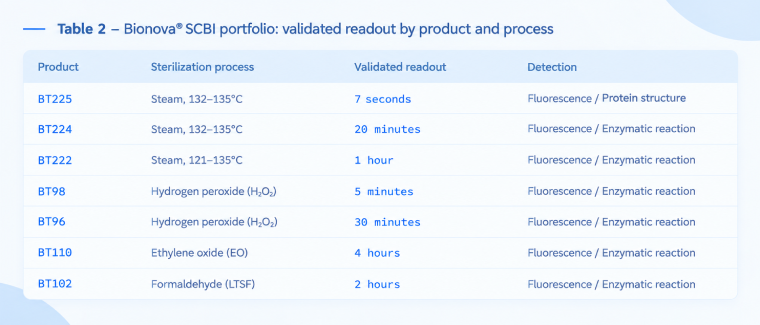
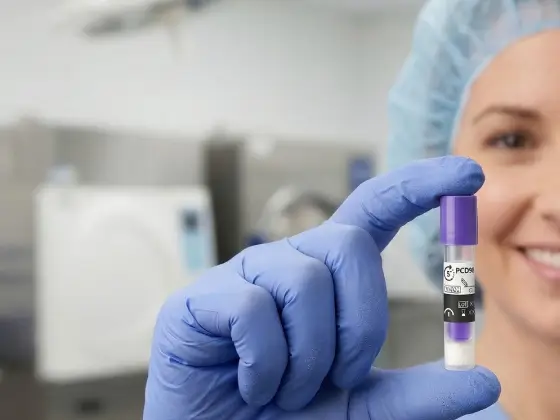
    Bionova® PCD98 was developed to address these limitations. Designed specifically for VH₂O₂ sterilization monitoring, it combines a Self-Contained Biological Indicator (SCBI) with a standardized Process Challenge Device (PCD), creating a defined and reproducible challenge without requiring manual assembly or the use of a sterilization pouch. Results are available in just five minutes using the Bionova® Hyper auto-reader, while digital traceability is achieved through the Bionova® Q platform.

    What Is Bionova® PCD98?

    Bionova® PCD98 is a single-use device that integrates biological monitoring and process challenge into a single solution for vaporized hydrogen peroxide sterilization.

    Each unit consists of:

    • A polypropylene tube containing a spore-inoculated carrier with Geobacillus stearothermophilus ATCC® 7953 (ATCC® is a registered trademark of American Type Culture Collection.).
    • A glass ampoule containing liquid culture medium.
    • A plastic cap with a permeable barrier that allows VH₂O₂ penetration.
    • A process indicator printed on the label that changes from violet to green after exposure to hydrogen peroxide.

    The device provides fluorescence-based readout in five minutes at 60 ± 2 °C using the Bionova® Hyper auto-reader. Visual confirmation remains available through color change, while every unit includes a DataMatrix code for integration with the Bionova® Q platform, enabling digital registration and traceability. Storage conditions, shelf life, and product specifications are standardized to support routine sterilization monitoring.

    Understanding the Difference Between a Process Challenge Device and a Standalone Biological Indicator

    According to ANSI/AAMI ST58:2024, a Process Challenge Device is a system containing a biological indicator—or a biological and chemical indicator combination—that evaluates the effective performance of a sterilization process by providing a challenge equal to or greater than the most difficult item routinely processed.

    This distinction is fundamental.

    A standalone biological indicator placed inside a sterilization pouch cannot provide the same defined challenge because its performance depends on multiple external variables. A ready to usea Process Challenge Device, by contrast, is specifically designed to reproduce a worst-case sterilization scenario by creating controlled barriers to sterilant penetration, air removal, and exposure of the biological indicator. If sterilization is effective under these more demanding conditions, it provides stronger evidence that the processed load has been adequately sterilized.

    Conventional Monitoring Versus Bionova® PCD98

    One of the main differences between conventional monitoring and Bionova® PCD98 is the level of standardization.

    With a biological indicator placed inside a sterilization pouch, the challenge level depends on factors such as pouch permeability, the assembly technique, and operator practice. Manual preparation introduces variability between users and between sterilization cycles.

    Bionova® PCD98 eliminates these variables through a fixed architecture designed to provide the same challenge every time.

    Unlike conventional monitoring methods, PCD98:

    • Requires no manual pouch assembly.
    • Is ready to use immediately.
    • Provides a fixed and reproducible challenge.
    • Delivers fluorescence-based results in five minutes.
    • Includes an integrated process indicator on the device label.

    This standardized design allows every monitoring cycle to be performed under consistent conditions, reducing variability associated with conventional biological indicator placement.

    Why the Challenge Level Matters in VH₂O₂ Sterilization

    The principle behind every Process Challenge Device is to simulate conditions that are equal to or more difficult than those presented by the most challenging devices routinely sterilized.

    In VH₂O₂ sterilization, sterilization efficacy depends on exposure time, temperature, and hydrogen peroxide concentration. Physical barriers such as lumens, enclosed cavities, cables, cameras, and complex instruments restrict sterilant penetration, making these devices significantly more difficult to sterilize than a biological indicator simply placed inside a pouch.

    Because a standalone biological indicator is exposed through a relatively permeable surface, it does not reproduce these demanding conditions.

    Bionova® PCD98 was specifically developed to provide a greater and standardized challenge representative of these more complex sterilization scenarios

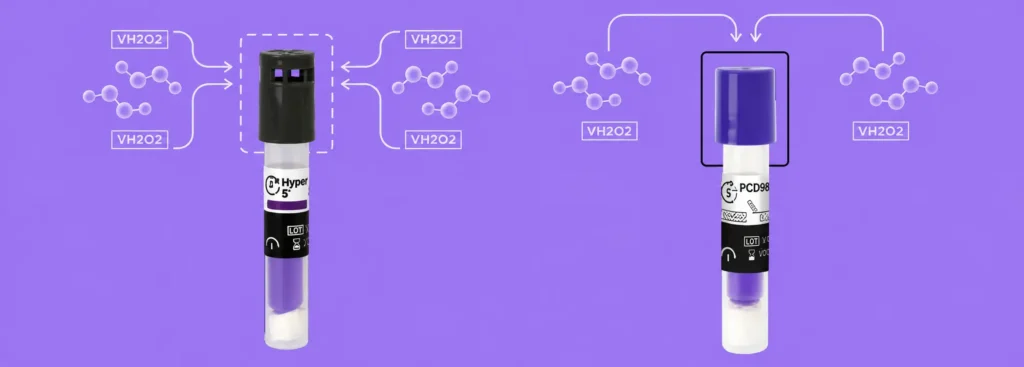
    Comparison between PCD98 and BT98 cap design.
    Comparison between PCD98 and BT98 cap design.

    How Bionova® PCD98 Creates a Standardized Process Challenge

    The effectiveness of a Process Challenge Device depends on its ability to reproduce conditions that are equal to or more demanding than those presented by the most difficult medical devices routinely processed during sterilization.

    Bionova® PCD98 achieves this objective through its self-contained architecture. The biological indicator containing Geobacillus stearothermophilus ATCC® 7953 is enclosed inside a polypropylene tube sealed with a permeable barrier cap. Before the sterilant reaches the spore carrier, vaporized hydrogen peroxide must diffuse through this controlled barrier.

    Unlike conventional monitoring approaches, the geometry and material properties of the device create a defined restriction to sterilant penetration. This restriction is established by design and manufacturing specifications rather than by pouch selection or operator technique, providing the same challenge in every sterilization cycle.

    The Role of the Permeable Barrier Cap

    The cap design is central to the performance of Bionova® PCD98 as a Process Challenge Device.

    Because vaporized hydrogen peroxide has relatively limited diffusion capacity, the pinhole-sized aperture creates a meaningful challenge during sterilization. This restricted opening performs two simultaneous functions throughout the sterilization cycle.

    During the vacuum phase, air must evacuate the internal cavity through the same narrow pathway before sterilant can effectively reach the biological indicator. During the exposure phase, vaporized hydrogen peroxide must diffuse inward through that identical opening until it reaches the spore carrier.

    By simultaneously challenging air removal and sterilant penetration, the device creates substantially more demanding conditions than an open configuration. This physical design closely reproduces the challenge presented by cannulated or lumen-bearing instruments, where trapped air must first be displaced before sterilant reaches the most distant internal surfaces.

    The standardized geometry of PCD98 provides a reproducible format that delivers the same internal cavity and the same controlled restriction in every unit manufactured. A passing result under these conditions provides meaningful evidence that the sterilization process was capable of overcoming the type of geometric challenge presented by the most difficult instruments routinely processed.

    Why Challenge Standardization Matters

    One of the principal limitations of monitoring with a biological indicator inside a sterilization pouch is that the challenge level is not fixed.

    Several variables influence the performance of the monitoring system, including:

    • The pouch manufacturer and material composition.
    • Lot-to-lot variation of sterilization pouches.
    • Manual assembly performed by the operator.
    • Device orientation and sealing.
    • Position within the sterilizer chamber.

    As a result, different operators or different sterilization cycles may not produce identical monitoring conditions.

    Bionova® PCD98 eliminates these variables through standardized manufacturing specifications. The polypropylene tube, permeable cap, and self-contained architecture provide a fixed challenge without requiring pouch selection or manual assembly. Every unit is designed to deliver the same reproducible process challenge, regardless of the facility or operator.

    Key Advantages of Bionova® PCD98

    1. Ready to Use Without a Sterilization Pouch: Bionova® PCD98 is placed directly inside the sterilizer without assembling a pouch. Eliminating this manual preparation step reduces the potential for operator-dependent errors while simplifying routine workflow in the Sterile Processing Department.
    2. Greater and Standardized Challenge: The process challenge is defined by the architecture of the device itself rather than by external variables. This allows Bionova® PCD98 to provide a higher and more consistent challenge than a standalone biological indicator placed inside a pouch.
    3. Five-Minute Fluorescence Results: Using the Bionova® Hyper auto-reader, fluorescence detection provides results within five minutes at 60 ± 2 °C. Faster result availability supports earlier load release decisions when compared with conventional biological indicator systems.
    4. Integrated Process Indicator: Every device incorporates a process indicator directly on the product label. After exposure to vaporized hydrogen peroxide, the indicator changes from violet to green, confirming sterilant contact without requiring a separate chemical indicator.
    5. Digital Traceability: Each Bionova® PCD98 includes a DataMatrix code that enables integration with the Bionova® Q platform. Automatic registration reduces manual transcription while creating audit-ready digital records for every sterilization cycle.
    6. Reproducible Placement: The device is placed directly in the most challenging location inside the sterilizer chamber, as identified by the sterilizer manufacturer or previous validation, without constructing a test pack or placing the device inside a tray.
    7. Reduced Operational Variability: By eliminating manual pouch preparation and reducing operator-dependent variables, Bionova® PCD98 delivers consistent monitoring conditions from cycle to cycle.

    Using Bionova® PCD98

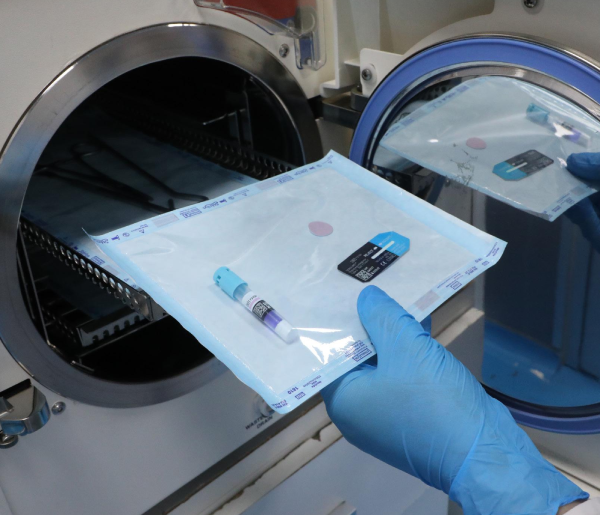
    Routine use begins by identifying the sterilizer number, cycle number, and processing date on the device. Bionova® PCD98 is then placed in the most challenging location inside the sterilizer chamber, following prior validation or the sterilizer manufacturer’s instructions. The device should not be placed inside a pouch or package.

    Following completion of the sterilization cycle, the process indicator is verified to confirm the color change from violet to green. The biological indicator is then activated by crushing the internal glass ampoule, allowing the culture medium to contact the spore carrier.

    The processed unit and an unprocessed positive control from the same lot are incubated in the Bionova® Hyper auto-reader for a maximum of five minutes at 60 ± 2 °C. Fluorescence indicates a positive result (sterilization FAIL), while the absence of fluorescence indicates a negative result (sterilization PASS). Results are recorded before disposal according to local waste regulations

    Regulatory and Standards Alignment

    Bionova® PCD98 has been developed to comply with internationally recognized standards applicable to biological and chemical indicators used in sterilization monitoring.

    The device complies with:

    • ISO 11138-1:2017Sterilization of health care products — Biological Indicators — Part 1: General Requirements.
    • ISO 11140-1:2014Sterilization of health care products — Chemical Indicators — Part 1: General Requirements.
    • ISO 11139:2018Sterilization of health care products — Vocabulary of terms used in sterilization and related equipment and process standards.

    In addition, Bionova® PCD98 facilitates compliance with standards and guidance documents that recommend the use of biological indicators within Process Challenge Devices for routine VH₂O₂ sterilization monitoring, including:

    • ANSI/AAMI ST58:2024Chemical sterilization and high-level disinfection in health care facilities.
    • ISO 11138-7:2019Guidance for the selection, use and interpretation of biological indicator results.
    • ISO 14937:2009General requirements for characterization of a sterilizing agent and the development, validation and routine control of a sterilization process for medical devices.

    Integration with the Bionova® Hyper Ecosystem

    Bionova® PCD98 is designed as part of the Bionova® Hyper integrated solution for VH₂O₂ sterilization monitoring. Within this ecosystem, each component performs a specific function:


    Component

    Role

    Bionova® PCD98
    Standardized sterilization challenge and biological detection
    Bionova® Hyper (BHY)Incubation at 60 ± 2 °C with five-minute fluorescence readout

    Bionova® Q

    Automatic data capture, digital traceability and audit-ready records

    Improving Consistency in VH₂O₂ Sterilization Monitoring

    Routine monitoring methods based on standalone biological indicators placed inside sterilization pouches may introduce variability because the challenge level depends on pouch characteristics, assembly technique, and operator practice.

    Bionova® PCD98 replaces these variable conditions with a standardized architecture specifically developed for vaporized hydrogen peroxide sterilization monitoring.

    Its self-contained design provides a defined and reproducible process challenge without requiring manual assembly or sterilization pouches. Combined with five-minute fluorescence results, an integrated process indicator, reproducible placement, and digital traceability through the Bionova® Hyper ecosystem, the device supports a consistent approach to routine monitoring in Sterile Processing Departments. 

    By providing a greater challenge than a standalone biological indicator in a pouch, Bionova® PCD98 aligns with ANSI/AAMI ST58:2024 recommendations while helping facilities standardize monitoring practices, reduce operational variability, and maintain complete digital traceability for every sterilization cycle.

  • Residual Protein Monitoring in Cannulated Medical Devices

    Residual Protein Monitoring in Cannulated Medical Devices

    Standard cleaning protocols leave measurable protein residues in most cannulated instruments. Here’s what three leading hospitals discovered — and what reprocessing teams should do about it.

    The reprocessing of reusable medical instruments is one of the most consequential — and most undermonitored — activities in any healthcare facility. While visible soil is easy to address, the invisible threat of residual protein deep inside narrow instrument channels is far harder to detect and far easier to overlook. Protein residues shield microorganisms from disinfectants and sterilants, creating a latent pathway for healthcare-associated infections (HAIs) that standard visual inspection or ATP bioluminescence simply cannot catch.

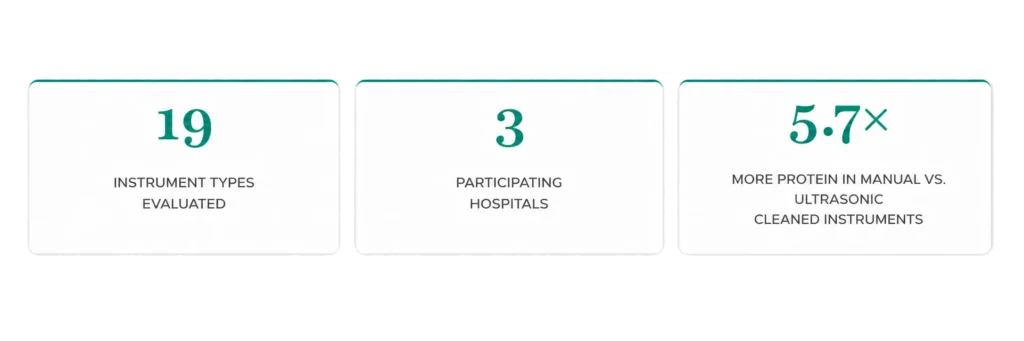
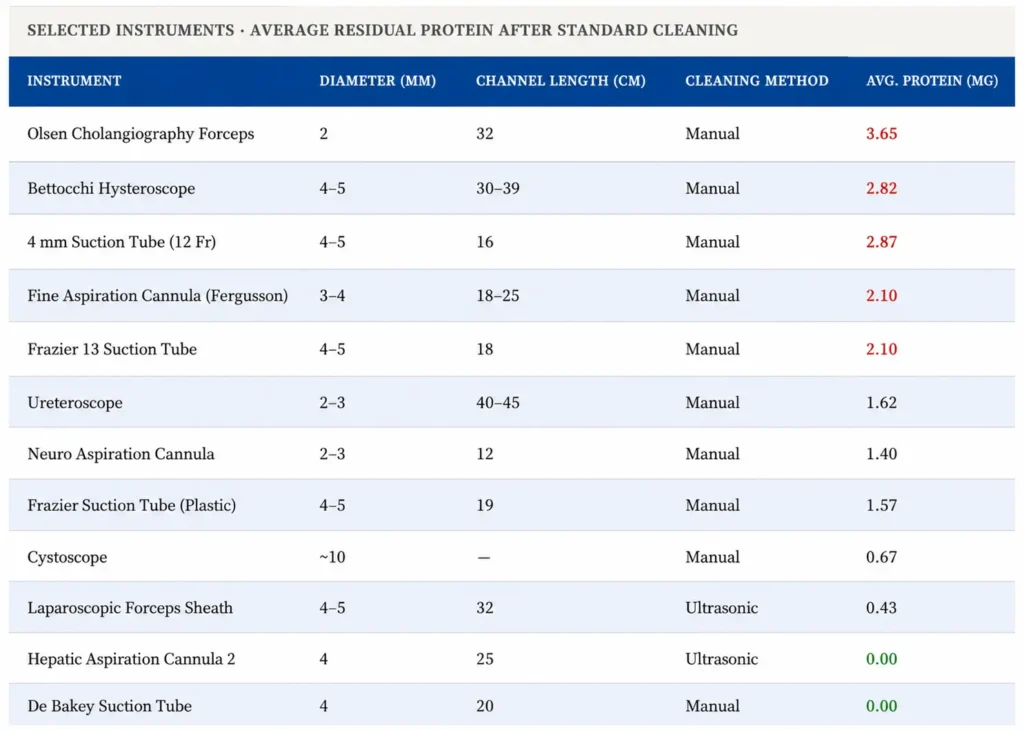
    To quantify this risk under real clinical conditions, a multicenter evaluation was conducted across three leading hospitals in Buenos Aires, Argentina: Hospital Italiano de Buenos Aires, Fundación Favaloro (University Hospital), and Hospital El Cruce Dr. Néstor Kirchner. The study assessed 19 distinct cannulated instrument types using the Chemdye® Pro1 Endo quantitative protein detection system — a BCA-based colorimetric assay adapted for internal lumens.

    Why Residual Protein in Cannulated Instruments Is a Patient Safety Issue

    Cannulated devices — instruments with narrow internal lumens such as ureteroscopes, hysteroscopes, suction tubes, and aspiration cannulas — present unique reprocessing challenges. Their complex geometry limits fluid dynamics, reduces the shear forces needed for soil removal, and creates dead spaces where biofilm and proteinaceous residue can accumulate and persist.

    The consequences are well-documented: residual proteins and biofilm impair the efficacy of high-level disinfection (HLD) and steam sterilization. Among cannulated devices, endoscopes represent the greatest cleaning challenge because of their complex geometries, narrow lumens, and diverse material composition. Several outbreaks of multidrug-resistant organisms have been traced directly to inadequate cleaning of these devices, prompting FDA safety communications and accelerated regulatory scrutiny of automated endoscope reprocessors (AERs).

    “The persistence of protein residues — even at levels well below visual detection thresholds — constitutes a latent patient safety risk, as these residues can shield microorganisms from disinfectants and sterilants.”

    — MULTICENTER STUDY CONCLUSIONS

    Guidelines from AAMI ST91 and the CDC support routine, preferably daily, monitoring of manual cleaning processes, and emphasize ongoing staff training and gap analysis. Yet in practice, most reprocessing departments lack the tools to verify cleaning effectiveness at the level of individual instruments and individual lumens.

    The Limits of Current Detection Methods

    Conventional post-cleaning verication methods each carry signicant limitations when applied to cannulated instruments.

    • Visual inspection: cannot detect sub-visible protein Ims or biolm within internal channels
    • ATP bioluminescence: not able to detect viruses or prions or even dead cells, which still represent an organic contamination.
    • Ninhydrin-based tests and TOC analysis: lack the sensitivity for low-level residues or are impractical for internal lumen access
    • Fluorescence imaging: cannot reach or quantify contamination within long narrow, or tortuous lumens.

    How the Chemdye® Pro1 Endo System Works

    The Chemdye® Pro1 Endo Hygiene Monitoring System is built around the well validated BCA (Bicinchoninic Acid) assay, adapted specically for internal lumen sampling. The system uses Chemdye® SWE high-absorption swabs — available in four diameters (1.7, 2.0, 2.7, and 3.0 mm) and 2.5 meters in length — that traverse the full length of an instrument’s internal channel in a single pass.

    DETECTION WORKFLOW

    1. A size-matched SWE swab is passed through the instrument’s internal channel in a single direction, collecting any residual protein.
    2. The swab is immersed in the Chemdye® Pro1 Endo reactive solution.
    3. Proteins reduce Cu²⁺ to Cu⁺, which forms a purple BCA–copper complex proportional to protein concentration.
    4. The device is incubated at 60 °C for 4 minutes in the Bionova® MiniPro reader.
    5. Absorbance at 562 nm is measured against a bovine serum albumin (BSA) calibration curve, delivering a quantitative result in μg of protein (range: 1–50 μg; LOD: 0.5 μg).

    This design addresses a fundamental limitation of prior methods: no commercially available system could previously access and quantify contamination within long, narrow, or complex lumens. The 2.5 m swab length covers flexible endoscopic channels exceeding 120 cm in a single sampling pass.

    Key Findings from the Multicenter Study

    1. PROTEIN CONTAMINATION IS WIDESPREAD AFTER STANDARD CLEANING

    Across all three hospitals and both cleaning modalities, the Pro1 Endo system detected protein residues in a signicant proportion of instruments that had already completed their institutional reprocessing protocol. Results ranged from 0 μg (undetectable) to 6.3 μg of protein per instrument conrming that standard cleaning does not universally eliminate internal organic contamination.

    2. NARROW-LUMEN, LONG-CHANNEL INSTRUMENTS POSE THE GREATEST RISK

    When protein results are normalized to internal surface area (μg/cm²), narrow instruments display disproportionately high contamination per unit area. The Olsen Cholangiography Forceps (2 mm diameter, 32 cm channel) showed an average surface density of 0.48 μg/cm², compared to 0.028 μg/cm² for the Ureteroscope and 0.010 μg/cm² for the Cystoscope. Reduced fluid shear, limited mechanical access, and laminar-to-turbulent flow transitions inside narrow channels all contribute to this pattern.

    3. Ultrasonic Cleaning Significantly Outperforms Manual Cleaning

    Instruments processed via automated ultrasonic cleaning showed an average residual protein level of 0.23 μg, compared to 1.31 μg for manually cleaned instruments — a 5.7-fold difference. Directed cavitation energy accesses complex internal surfaces more reproducibly than manual techniques, which are inherently subject to operator variability.

    Critically, however, automated cleaning was not infallible. The Laparoscopic Forceps Sheath (ultrasonic) still registered 1.3 μg in one replicate, and the Cannula Pump showed 1 μg. Instruments with multi-section or multi-lumen architectures may include areas of incomplete cavitation access. Post-cleaning verification remains essential regardless of the cleaning modality.

    CLINICAL IMPLICATION

    Without post-cleaning verication, instruments carrying residual protein loads
    could proceed directly to sterilization — possibly reducing the sterilant penetration and efficacy—
    without any opportunity for corrective action.

    4. PRO1 ENDO ENABLES REAL-TIME CORRECTIVE ACTION

    The most operationally signicant finding of the study was the system’s role as an active feedback tool. At Hospital El Cruce, two instruments with initial readings above 5 μg were agged, re-washed, and retested: 

    • The Frazier 9 Fr Suction Tube started at >50 μg. Aer one additional manual
      wash, the result dropped to 0.5 μg — a greater than 98% reduction.
    • The Frazier 13 Suction Tube started at 6.3 μg. Two additional manual washes
      still le it at 4.9 μg. Only aer switching to ultrasonic cleaning did the result
      reach 0 μg. 

    These cases illustrate the system’s unique value: it does not merely conrm a pass or fail — it identfies when a cleaning method is inadequate for a particular instrument and guides escalation to a more eective approach.

    Six Evidence-Based Conclusions for Reprocessing Departments

    1. Standard cleaning is not universally suficient: Residual protein was found across all three institutions and both cleaning methods, confirming that compliance with FUS alone does not guarantee internal cleanliness in cannulated instruments
    2. Automate where possible: Ultrasonic cleaning reduces average residual protein by a factor of 57 compared to manual cleaning. Where instrument compatibility permits, automated cleaning should be the preferred modality.
    3. Prioritize narrow-lumen instruments for enhanced protocols: Instruments with internal diameters s2 mm and longer channels particularly cholangiography forceps, ureteroscopes, and neuro aspiration cannulas-require dedicated monitoring programs.
    4. Use quantitative, not qualitative, monitoring: Only a quantitative system can guide corrective action and document the degree of improvement aer re-washing.
    5. Pass/fall Indicators are insucient for complex instruments: Verify every cleaning episode, not just periodic audits.
      Inter-procedural variability in soil load and cleaning thoroughness means that a single clean instrument does not predict the next
    6. Document results for QMS and regulatory compliance: Quantitative records from the Bionoval MiniPro reader create a traceable audit trail supporting compliance with 150 15883 AAMI ST79, and accreditation frameworks that require evidence-based reprocessing quality monitoring.

    Conclusion

    This multicenter study provides clear, real-world evidence that residual protein contamination in reusable cannulated medical instruments is not a theoretical concern — it is a confirmed, measurable phenomenon occurring under standard institutional conditions. The Chemdye® Pro1 Endo system demonstrated superior sensitivity, broad instrument compatibility across all 19 device types evaluated, and direct clinical utility as a real-time corrective tool that no conventional method can replicate.

    Adopting quantitative protein monitoring as a routine component of the reprocessing verication workflow represents one of the most actionable steps a facility can take to reduce the risk of device-associated infections in patients undergoing procedures with cannulated instruments.

    “Pro1 Endo functions not merely as a passive quality indicator, but as an active component of the cleaning verication loop — one that prevents contaminated instruments from proceeding to sterilization and subsequent patient use.”

  • CSSD Cleaning Monitoring: Safety and Traceability

    CSSD Cleaning Monitoring: Safety and Traceability

    Why CSSD Cleaning Monitoring Is Critical

    Cleaning is the first and most important step in reprocessing. If organic residues remain on instruments, sterilization may fail regardless of the cycle parameters.

    A proper CSSD cleaning monitoring strategy must control all critical variables involved in the washing cycle:

    • Time
    • Temperature
    • Detergent type and concentration
    • Water quality
    • Mechanical action

    Given the complexity of these parameters, relying on manual checks is no longer enough. Automated monitoring ensures consistency, repeatability, and compliance.

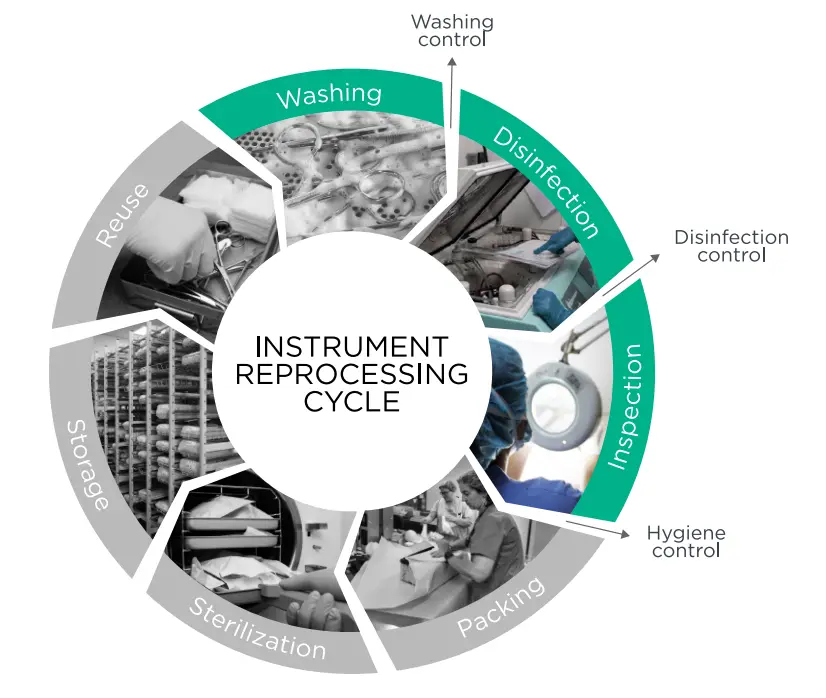
    A diagram illustrating the seven-stage sterile processing cycle, emphasizing critical control points for washing, disinfection, and inspection

    Challenges in Cleaning Validation

    Many CSSDs still face key limitations when validating cleaning processes:

    • No verification of every load and rack
    • Lack of objective and standardized evaluation
    • Limited or no traceability
    • Use of ATP-based systems that do not detect proteins or prions

    Protein residues are among the most critical contaminants in medical device reprocessing. Unlike ATP systems, protein-based monitoring solutions allow a more accurate evaluation of cleaning effectiveness—including risks associated with prions.

    Advanced CSSD Cleaning Monitoring with Terragene Solutions

    A complete CSSD cleaning monitoring approach integrates multiple technologies to ensure performance, hygiene control, and full traceability.

    For cleaning performance monitoring, Chemdye® Splat indicators use a specially formulated test soil that simulates organic residues typically found on medical instruments. These highly versatile indicators can be used in both washer-disinfectors and ultrasonic washers, depending on the holder selected, and can be processed with the load or in an empty chamber. They are suitable for both routine monitoring and equipment performance qualification.

    For ultrasonic cleaning processes, CDWU & CDWU-Z cavitation indicators combined with holders allow you to evaluate cavitation energy distribution and detect ineffective zones inside the washer. When paired with CAVITEST® auto-reader, results become fully objective, delivering quantifiable data and clear Pass/Fail outcomes.

    After cleaning, surgical instruments must be disinfected to ensure safe subsequent handling and processing. Thermal disinfection with moist heat, is the most common method for disinfection of medical devices in the hospital setting. Thermodisinfection can be specifically monitored using IT27W indicators,

    For hygiene monitoring, Terragene introduces advanced protein detection systems such as PRO1 MICRO & PRO1 ENDO, enabling quantitative measurement of protein residues on surfaces and inside cannulated instruments. Together with the MiniPro auto-reader, these systems enable incubation and quantitative readout of protein detection pens such as Chemdye® PRO1 MICRO, designed for the detection of surface proteins and allergens.

    After cleaning, surgical instruments must be disinfected to ensure safe subsequent handling and processing. Thermal disinfection with moist heat, is the most common method for disinfection of medical devices in the hospital setting. Thermodisinfection can be specifically monitored using IT27W indicators,

    For hygiene monitoring, Terragene introduces advanced protein detection systems such as PRO1 MICRO & PRO1 ENDO, enabling quantitative measurement of protein residues on surfaces and inside cannulated instruments. Together with the MiniPro auto-reader, these systems enable incubation and quantitative readout of protein detection pens such as Chemdye® PRO1 MICRO, designed for the detection of surface proteins and allergens.

    PRO1 Micro Hygiene Monitoring System and Bionova MiniPro  auto-reader for the detection and quantification of proteins on surfaces.

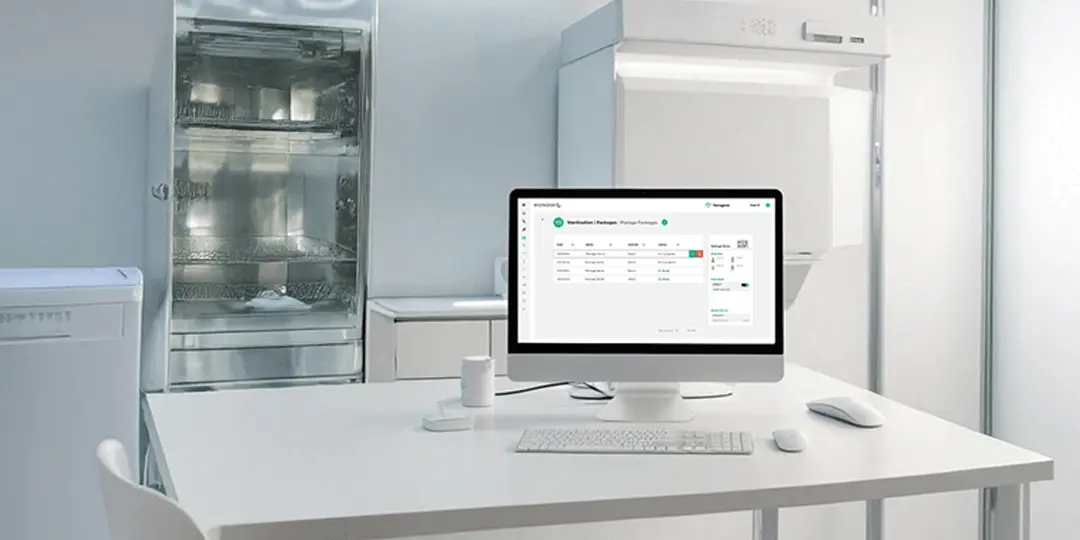
    Finally, all data can be integrated into Bionova® Q CSSD software, enabling real-time monitoring, full traceability, and complete visibility of the reprocessing cycle—from cleaning to sterilization and final release.

  • CSSD Traceability Software for Infection Control

    CSSD Traceability Software for Infection Control

    In today’s healthcare environments, CSSD traceability software plays a critical role in ensuring safe and efficient sterilization processes. Without proper traceability, sterilization workflows become difficult to control, audit, and optimize.

    Bionova Q enables full sterilization traceability, transforming process data into clear, actionable insights.

    Full Control of Sterilization Processes

    Bionova Q provides:

    • End-to-end CSSD traceability
    • Real-time monitoring of sterilization cycles
    • Digital records for compliance and audits
    • Data-driven process control

    This allows healthcare facilities to reduce uncertainty and improve consistency across all reprocessing stages.

    From Compliance to Process Optimization

    More than a traceability system, Bionova Q is a sterile processing software designed to improve performance, identify deviations, and support better decision-making.

    By leveraging data, hospitals can move from reactive control to proactive sterilization management.

  • BPH-Photon Incubator for Rapid and Reliable Steam Sterilization Control

    BPH-Photon Incubator for Rapid and Reliable Steam Sterilization Control

    In healthcare environments, BPH-Photon Incubator plays a critical role in steam sterilization control by enabling rapid and reliable release of sterilized loads. In operating rooms, central sterile services departments, and emergency settings—where every second matters—immediate biological indicator results are essential to protect patient safety and reduce the risk of healthcare-associated infections (HAIs).

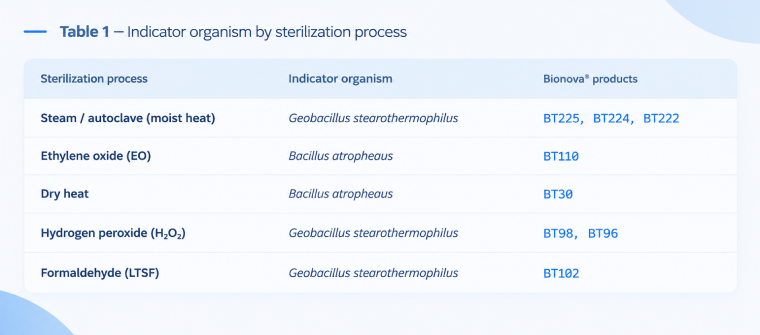
    Steam sterilization remains one of the most widely used and effective methods for reprocessing medical devices. However, a load can only be considered safe when sterilization has been biologically verified. Unlike chemical indicators, biological indicators directly challenge the process using highly resistant spores such as Geobacillus stearothermophilus, providing the highest level of assurance.

    For years, biological monitoring required long incubation times, delaying load release and impacting workflow efficiency. Today, new technologies are changing that paradigm.

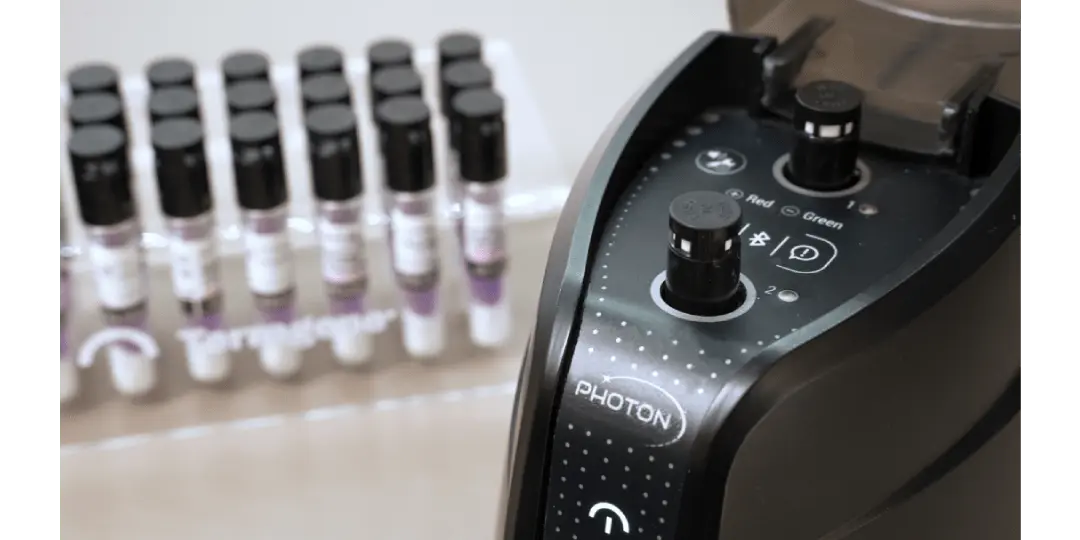
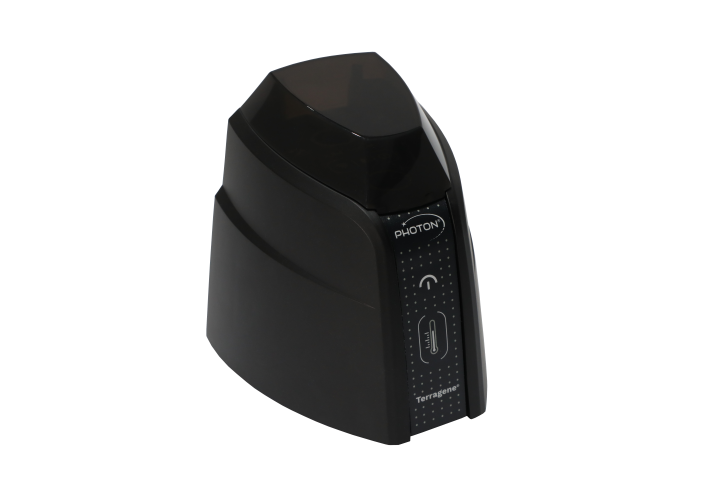
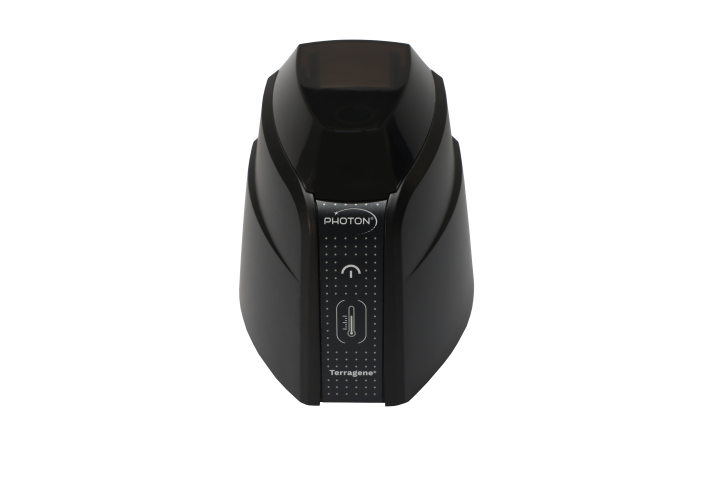
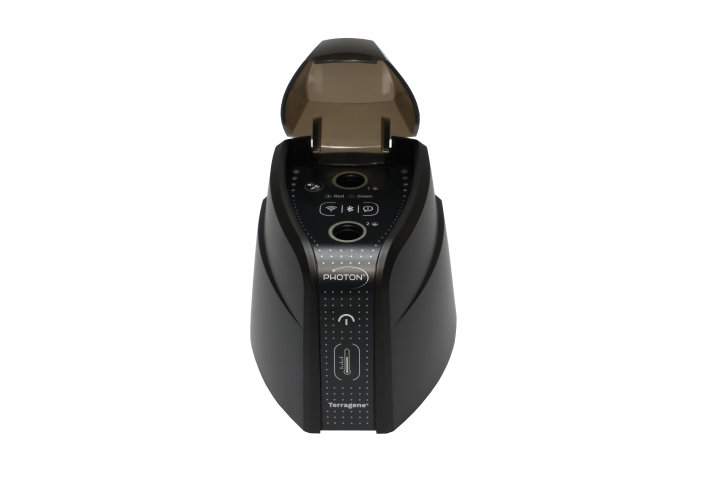
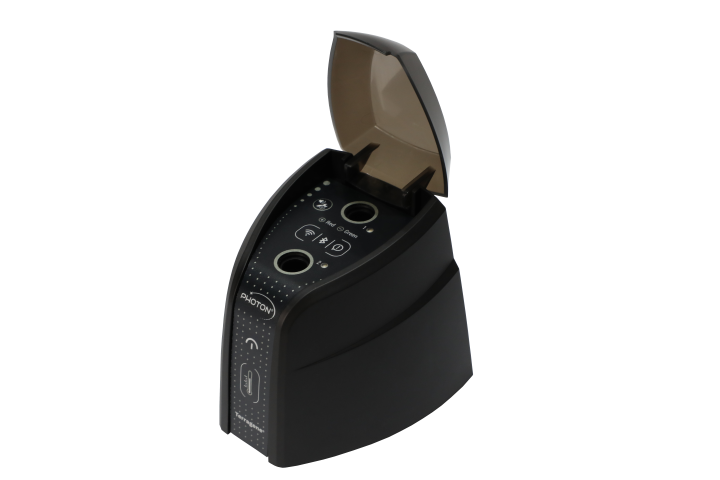
    The Photon system, developed by Terragene, combines speed and safety to support early, confident decision-making. At the center of this system is the BPH-Photon Incubator, an automatic incubator and reader designed to deliver a fully automated biological indicator readout in just 7 seconds.

    When used with the Photon BT225 self-contained biological indicator, the system provides immediate results by detecting irreversible protein damage in spores caused by an effective steam sterilization cycle. This innovative approach eliminates the need to wait for microbial growth while maintaining high reliability and regulatory compliance.

    Validated against international standards, the 7-second readout correlates with the traditional 7-day incubation result and demonstrates a sensitivity of ≥97%, supporting faster and safer release of sterilized loads in demanding healthcare environments.